Why Gen 3 and Gen 4 Labels Should Not Replace Sample Testing

Gen 3 and Gen 4 have become convenient ways to discuss newer pickleball paddle constructions.
For a brand owner, product manager, or wholesale buyer, the labels appear to simplify sourcing. One term can suggest a construction direction, a more technical product story, and a place in the market. It can also make a quote request sound precise:
“Please quote a Gen 4 paddle.”
The problem is that the request is not yet a complete specification.
Generation labels can help a buyer open the conversation, but they do not automatically define the exact surface, core structure, foam placement, thickness, shape, weight range, balance, edge construction, artwork method, compliance path, or bulk-production standard.
That means a Gen 4 label is not a substitute for comparing samples. A Gen 3 label is not proof that two suppliers are quoting the same build. And a higher generation number does not, by itself, prove that the paddle is a better commercial SKU for a specific brand or sales channel.
The factory-side question is not simply, “Which generation is newer?”
It is: “Which documented construction produces the right product for the target buyer, and can that result be repeated in production?”
Table of Contents
The Factory View: A Generation Label Is a Category Signal, Not a Build Sheet
Generation language is useful because it helps buyers group products that may share a broad construction idea. It gives the factory a starting point for discussing thermoformed builds, foam-enhanced structures, full-foam directions, carbon fiber surfaces, and newer premium-paddle concepts.
But Gen 3 and Gen 4 are market conventions, not complete engineering taxonomies. They do not function as supplier-independent build sheets, and the label alone does not tell a buyer which materials, densities, layups, bonding steps, tolerances, or test limits have been specified.
In common market usage, Gen 3 often describes a thermoformed carbon-faced paddle that retains a polypropylene honeycomb or hybrid internal structure while adding foam around the perimeter or other foam-enhanced elements. Some suppliers also use terms such as unibody construction, carbon wrapping, propulsion core, or foam suspension. Those terms can describe materially different builds.
Gen 4 is commonly used for a further shift toward full-foam, mostly foam, or multi-layer composite foam cores. Some designs add tuned foam densities, cutout patterns, elastic or TPU frame components, or other ways of managing flex, vibration, and response. None of those features should be assumed from the generation number; a supplier may use only some of them, or use the same label for a different architecture.
The practical result is simple: Supplier A may quote a thermoformed honeycomb build with perimeter foam as Gen 3, while Supplier B may quote a mostly foam or multi-material core as Gen 4. Even two Gen 4 quotations can describe different physical structures.
A useful generation label narrows the discussion. A usable build sheet finishes it.
What the Labels Can and Cannot Tell a Buyer
| Decision Area | What a Gen 3 or Gen 4 Label May Signal | What the Label Does Not Confirm |
|---|---|---|
| Product direction | A newer, technical, foam-related, or thermoformed paddle concept | The exact internal structure used by a specific supplier |
| Surface | A carbon fiber or T700 direction may be offered | The exact material, texture, finish, artwork method, or surface consistency |
| Core | Foam enhancement or a foam-core concept may be involved | Foam type, density, placement, bonding method, or finished response |
| Thickness | Common thickness options may be available | Which thickness fits the target buyer or how the complete paddle will feel |
| Performance story | A premium, power, control, stability, or technical story may be intended | Measured or repeatable performance in the buyer’s final specification |
| Compliance | The model may be developed toward applicable approval requirements | Approval, listing, or ongoing compliance for the final submitted model |
| Production | A factory may have a relevant construction route | Weight tolerance, balance consistency, edge finish, bonding, cosmetics, or reorder repeatability |
The label is helpful in the first column. Sample testing and specification control are needed for the second.
Why “Higher Generation” Does Not Automatically Mean “Better SKU”
A product can be technically interesting and still be wrong for the channel.
The best construction for a premium direct-to-consumer launch may be unnecessary for a club program. A more responsive sample may not fit a control-oriented brand promise. A full-foam direction may create a stronger technical story, but it may also change cost, weight, sound, feel, production control, and the way the SKU must be explained.
For procurement, “better” needs a business definition:
- Better for which player or institutional buyer?
- Better for which price tier?
- Better for which sales channel?
- Better for which product-line role?
- Better under which artwork and packaging requirements?
- Better at the first sample, or better across repeat production orders?
A Gen 4 direction may be appropriate for a technical hero SKU. A Gen 3 direction may fit another brand’s target feel, price architecture, or existing customer expectations more closely. In some programs, a more conventional thermoformed, cold-pressed, carbon fiber, or fiberglass construction may be the better commercial choice.
The generation number should not choose the SKU before the buyer defines what the SKU must do.
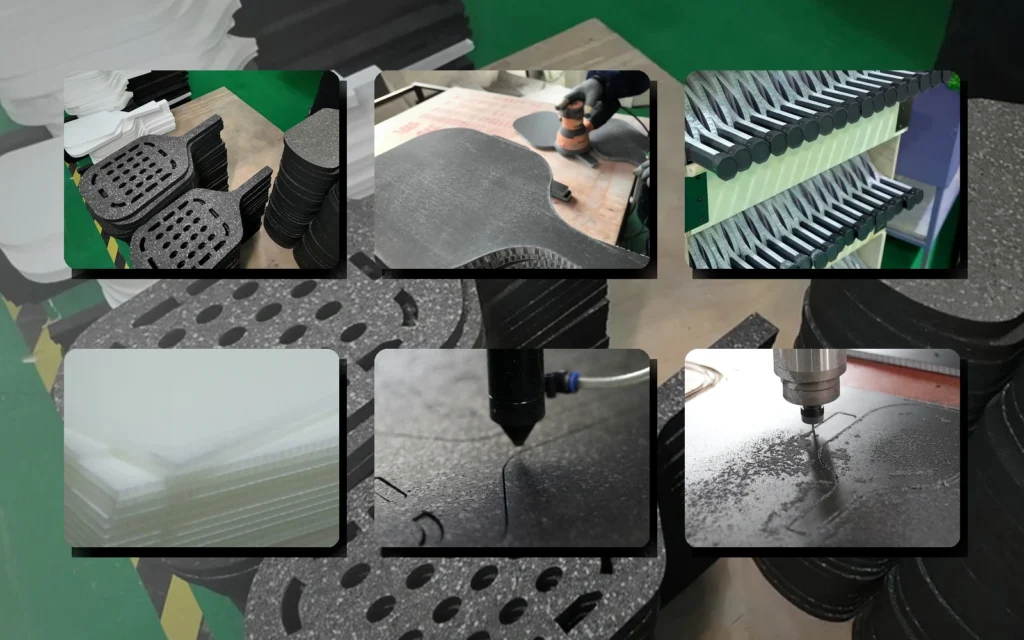
Materials and Manufacturing Tradeoffs Behind the Label
The construction name is only one layer of the decision. Buyers should compare the system around it.
| Tradeoff | Why It Matters During Sampling | What to Record for Production |
|---|---|---|
| Surface material and finish | Affects appearance, texture, artwork compatibility, and product positioning | Exact surface direction, finish, approved appearance, artwork method, and inspection criteria |
| Core and foam structure | Can change response, stability, sound, weight, and product story | Supplier-confirmed structure, material references, thickness, and approved cutaway or build specification |
| Thermoformed process | May support a more integrated construction, but process consistency still matters | Process route, bonding checkpoints, edge/perimeter requirements, and defect criteria |
| Thickness | Changes the complete paddle direction but does not act alone | Nominal thickness, allowed tolerance, shape, core, weight range, and target feel |
| Weight and balance | Two paddles with the same listed weight can feel different in use | Approved weight range, balance target, and measurement method |
| Power and rebound behavior | Static stiffness alone may not capture the dynamic response of newer non-uniform constructions | Development-screening method, official PBCoR result when certification is required, sample age, and acceptance limit |
| Surface friction and roughness | Texture, coating, and molded features affect friction and can vary after processing | Coefficient-of-friction or approved roughness test method, measurement locations, limits, and batch records |
| Swingweight and twistweight | Mass distribution changes maneuverability and resistance to twisting even at the same total weight | Measurement fixture, units, target range, and sample-to-batch consistency |
| Edge and perimeter | Influences protection, cosmetics, finish quality, and construction control | Edge material, fit, bond, alignment, finish, and packaging protection |
| Handle and grip | Shapes buyer fit and can influence repeat-order satisfaction | Handle length, circumference, grip material, wrap standard, end cap, and alignment |
| Artwork and coating | Can alter appearance and may affect the intended surface result | Print method, coverage, color standard, registration, finish, and approved proof |
| Compliance plan | Depends on the complete final model, not the generation name | Final submitted specification, model designation, test documents, and controlled production changes |
These tradeoffs explain why two paddles carrying the same generation label may not be interchangeable.
The Biggest Sampling Mistake: Comparing Labels Instead of Controlled Variables
Buyers often request one Gen 3 sample and one Gen 4 sample, play with each briefly, and select the one they prefer.
That can produce a decision, but not necessarily a useful conclusion.
If the samples also differ in shape, thickness, handle length, surface finish, weight, balance, grip, and artwork, the buyer is not isolating a generation difference. The buyer is comparing two complete—and possibly unrelated—paddles.
A more useful comparison controls as many variables as practical.
For example, a buyer may request paired samples with:
- The same shape and handle length.
- The same nominal thickness.
- A comparable surface and artwork treatment.
- A defined weight range and balance target.
- The same grip specification.
- Clear documentation of the internal construction difference.
This does not turn a subjective play test into a laboratory result. It simply makes the commercial comparison more informative.
If controlled paired samples are not available, the buyer should document every difference and avoid attributing the entire result to “Gen 3” or “Gen 4.”
What Sample Testing Should Actually Answer
Sample testing should not be reduced to “Which paddle feels best?” It should answer whether the proposed SKU matches its brief.
1. Does the Construction Match the Supplier’s Description?
The buyer should receive a clear specification for the reviewed sample. If the label is Gen 3 or Gen 4, the factory should also describe the actual surface, core direction, foam structure, process, thickness, edge, handle, and weight target used in that sample.
The goal is not to expose every proprietary process detail. It is to ensure the buyer is approving a defined product instead of a marketing term.
2. Does the Sample Fit the Intended Buyer and SKU Role?
A technical hero product, control-oriented retail SKU, power-oriented ecommerce SKU, distributor premium model, and club paddle do not share the same acceptance criteria.
Reviewers should score the sample against the intended role, not against a vague idea of what the newest paddle should feel like.
3. Are Weight and Balance Inside a Useful Target?
A single sample weight is not a production tolerance. Record the weight, balance impression or measurement method, and the acceptable range for the commercial product.
If a second sample with the same nominal specification feels materially different, investigate before approving the build.
Swingweight and twistweight can add useful development data. Swingweight describes rotational inertia during the swing; twistweight describes resistance to twisting around the paddle’s long axis. Neither number identifies foam density by itself. Use them to compare mass distribution and off-center stability, then use construction records, multiple samples, and—where available—cutaway, ultrasonic, or other core-integrity checks to investigate internal consistency.
4. Have Power, Stiffness, and Surface Characteristics Been Screened?
For a performance-oriented or certification-bound SKU, “core rebound rate” is too vague to be an acceptance criterion. Define the actual method and limit.
Useful checkpoints may include:
- Static deflection: measures paddle-face stiffness under a defined fixture and load. It remains useful, but USA Pickleball’s PBCoR development notice explains that static deflection alone may not fully characterize the dynamic response of newer, non-uniform constructions.
- PBCoR: the Paddle/Ball Coefficient of Restitution is a dynamic measure used by USA Pickleball to quantify paddle power or trampoline effect. When certification is required, internal screening supports development but does not replace official testing of the final submitted model.
- Coefficient of friction and surface roughness: use the applicable fixture, measurement locations, and current limits to check whether texture, coating, molded features, or post-process variation create an inconsistent surface.
- Core-integrity checks: compare multiple samples and, when the project justifies it, use ultrasonic inspection or a controlled destructive cutaway to investigate voids, crushing, bond gaps, or uneven internal placement.
USA Pickleball’s published manufacturer test plan identifies dimensions, coefficient of friction, deflection, reflection/gloss, and roughness among its paddle tests. Its Equipment Standards Manual should be treated as the governing reference for the current certification specification—not a supplier’s generation label or an old threshold copied from a product page.
5. Are the Surface, Edge, Handle, and Cosmetics Ready for the Brand?
Sample approval must include more than playing feel. Review surface appearance, texture consistency, print clarity, color, edge fit, grip wrap, handle alignment, end-cap finish, and packaging protection.
These details strongly influence returns, reviews, distributor confidence, and reorder satisfaction.
6. Can the Result Become a Production Standard?
The final question is the most important: can the factory reproduce the approved direction at the required order volume?
The approved sample should become a signed or otherwise documented reference linked to a specification sheet, tolerance plan, artwork proof, packaging standard, and QC checklist.
A Practical Gen 3 vs Gen 4 Sample Review Scorecard
Use one scorecard for every candidate. Add product-specific tests where necessary.
| Review Area | Questions to Answer | Approval Output |
|---|---|---|
| Buyer fit | Does the paddle match the target user and channel? | Pass, revise, or reject with reason |
| Specification identity | Is the actual construction documented beyond the generation label? | Approved specification reference |
| Playing direction | Does the sample support the intended control, power, stability, or balanced positioning? | Qualified internal product description |
| Weight and balance | Is the result acceptable, and what range must production hold? | Target and tolerance |
| Swingweight and twistweight | Does mass distribution fit the SKU, and can it be repeated? | Test method, units, target range, and tolerance |
| Stiffness and dynamic power | Which screening method applies, and does certification require official PBCoR testing? | Deflection/PBCoR plan, sample condition, limits, and records |
| Surface and artwork | Are texture, appearance, print, coating, and color acceptable? | Approved physical sample and artwork proof |
| Surface friction and roughness | Does the finished face meet the selected development or compliance method across specified locations? | Method, measurement map, limit, and batch record |
| Core integrity | Are internal materials, placement, bonding, and condition consistent across samples? | Construction record and agreed inspection or audit method |
| Edge, handle, and grip | Are fit, finish, comfort direction, alignment, and assembly acceptable? | Component and workmanship standard |
| Packaging | Does packaging protect the paddle and support the channel? | Approved packaging specification |
| Compliance path | What testing or submission work is required for the final model? | Responsibility and document plan |
| Repeatability | Which checkpoints will verify that bulk goods match the approved direction? | QC checklist and inspection method |
This framework prevents the newest-sounding label from receiving an automatic pass.
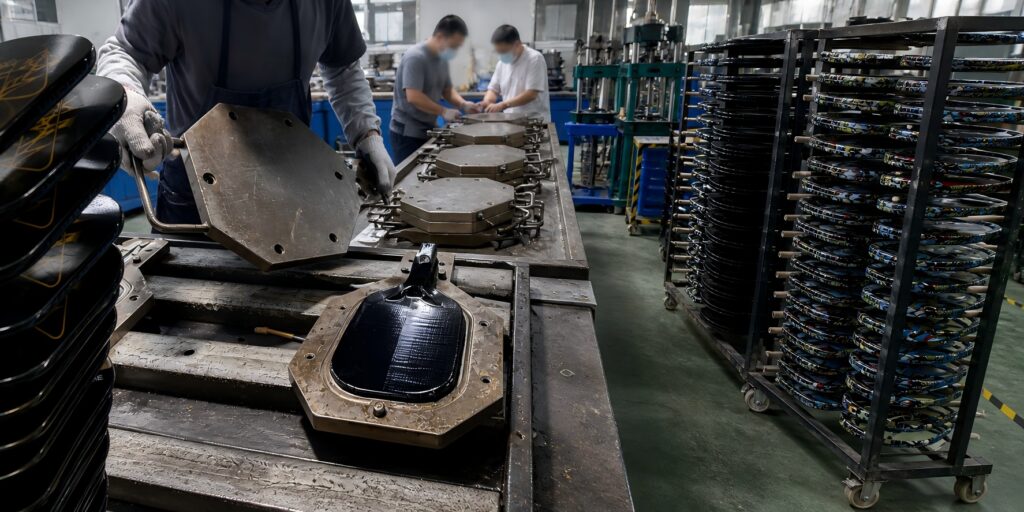
A Good Sample Is Still Only the Beginning
Sample testing protects the product decision, but one strong sample does not prove bulk consistency.
After approval, the buyer and factory need to translate the sample into controlled production requirements. Depending on the project, those controls may include:
- Incoming material identification.
- Core, foam, and component confirmation.
- Process and bonding checkpoints.
- Paddle weight and thickness ranges.
- Balance, swingweight, and twistweight checks where required.
- Defined deflection, PBCoR-screening, friction, roughness, or core-integrity checks where relevant.
- Surface appearance and finish inspection.
- Edge, handle, grip, and end-cap workmanship.
- Artwork position, color, and registration.
- Packaging and carton standards.
- Pre-shipment inspection records.
This is especially important when a product’s marketing depends heavily on its construction story. If production varies while the listing continues to say Gen 3 or Gen 4, the label can hide a consistency problem instead of solving it.
For wholesale and private-label programs, repeatability matters more than one impressive paddle.
Generation Labels Do Not Confirm Approval Status
Buyers should also separate generation language from compliance language.
A paddle is not automatically approved, tournament-ready, or listed because it is called Gen 3, Gen 4, foam core, thermoformed, or T700. Compliance applies to the final model and its controlled specification.
For projects that need USAPA-ready development support, the compliance path should begin early. The buyer and factory should confirm the intended construction, model identity, artwork, sample version, testing responsibilities, submission plan, and the production changes that would require review.
USA Pickleball’s published certification guidance is especially relevant to B2B buyers: certification includes testing and manufacturer attestations about materials and construction, and production units are expected to remain consistent with the certified samples. Its PBCoR program was introduced to address dynamic power or trampoline behavior that static stiffness testing did not fully characterize. That makes final-production identity and change control part of the compliance discussion—not administrative details after sampling.
Safe product communication should describe development support conservatively until product-specific approval and listing evidence is available.
The generation label can support the product story. It cannot replace the approval process.
A Better Brief for Gen 3 and Gen 4 Paddle Samples
Instead of requesting “your best Gen 4 paddle,” prepare a short comparison brief:
- Target buyer: improving player, advanced player, club, retailer, distributor, Amazon shopper, or another defined group.
- SKU role: control model, power model, balanced premium SKU, technical hero product, or supporting line.
- Sales channel and price tier: direct ecommerce, Amazon, specialty retail, distributor, club program, or private label.
- Comparison goal: evaluate construction direction, playing feel, cost-position fit, claim support, or replacement of an existing model.
- Controlled variables: shape, handle length, thickness, weight range, balance target, surface, grip, artwork, and packaging.
- Construction disclosure: supplier-confirmed surface, core/foam direction, process, edge/perimeter, and other relevant build details.
- Review method: who will test, how many samples are needed, which deflection, PBCoR-screening, surface, mass-distribution, or core-integrity checks apply, and how results will be recorded.
- Compliance need: recreational positioning or USAPA-ready development and submission planning.
- QC expectations: tolerances and cosmetic, assembly, artwork, packaging, and inspection standards.
- Reorder requirement: what must remain consistent across the first production order and future batches.
This brief gives the factory enough context to recommend meaningful samples instead of simply sending the product with the highest generation number.
VortexPaddle Note
VortexPaddle supports OEM, ODM, private-label, and custom pickleball paddle development for brands, clubs, distributors, retailers, and sports product companies.
If you are comparing Gen 3 and Gen 4 paddle directions, begin with the target buyer and SKU role. Then compare supplier-confirmed constructions through controlled samples, written acceptance criteria, compliance planning, and bulk-production QC.
Do not choose a generation label and hope it creates the right product.
Choose a product direction, test the evidence, and build a repeatable specification around the approved result.
Request a Gen 3 vs Gen 4 Sample Comparison
FAQ
What is the difference between a Gen 3 and Gen 4 pickleball paddle?
In common market usage, Gen 3 often refers to a thermoformed carbon-faced build that keeps a polypropylene honeycomb or hybrid core while adding perimeter foam or other foam-enhanced elements. Gen 4 often refers to a further move toward full-foam, mostly foam, or multi-layer composite foam cores, sometimes with tuned densities, cutout patterns, or elastic frame components. These are sourcing conventions, not complete universal specifications. Ask each supplier to document the actual surface, core and foam structure, layup, thickness, edge or perimeter, weight target, and manufacturing process used in the quoted sample.
Is a Gen 4 paddle automatically better than a Gen 3 paddle?
No. A higher generation number does not automatically mean a better SKU. The better choice depends on the target buyer, desired playing direction, channel, price tier, construction, weight and balance, artwork, compliance path, production consistency, and brand promise.
Why do two paddles with the same generation label feel different?
They may use different surfaces, cores, foam structures, thicknesses, shapes, handles, weights, balances, grips, edge constructions, finishes, or production methods. The generation label alone does not control those variables.
How should a buyer compare Gen 3 and Gen 4 samples?
Keep major variables as consistent as practical, document every difference, and score each sample against the same buyer, SKU, construction, feel, weight, balance, swingweight/twistweight, surface, workmanship, packaging, compliance, and repeatability criteria. For certification-bound development, define applicable static-deflection, PBCoR, coefficient-of-friction, and roughness checks using the current official method. Do not attribute every difference to the generation name.
Does approving one sample guarantee bulk quality?
No. An approved sample should become the reference for a written specification, tolerance plan, artwork proof, packaging standard, and QC checklist. Bulk inspection is still needed to confirm that production matches the approved direction.
Does a Gen 3 or Gen 4 label mean the paddle is USAPA approved?
No. A generation label does not confirm approval or listing. Approval-related claims should be based on the final model, its controlled specification, required testing, submission status, and product-specific documentation.