Cold-Pressed vs Thermoformed Pickleball Paddles: Manufacturing, QC and Sourcing Trade-offs
Compare cold-pressed and thermoformed paddle construction as manufacturing choices, then validate QC, samples, change control, and compliance before bulk production.

If you are sourcing paddles for a brand, distributor, retail program, or institutional project, do not treat “cold pressed” and “thermoformed” as quality grades.
They describe different manufacturing architectures. A cold-pressed paddle commonly uses face sheets bonded to a core under pressure, followed by trimming and perimeter finishing. A thermoformed paddle uses heat and pressure during molding and can integrate the perimeter more deeply into the structure. Either route can produce a controlled product, and either route can create problems if materials, process parameters, inspection, or change control are weak.
For procurement, the better question is not “Which technology is more premium?” It is:
Which construction fits the product brief, and can the supplier reproduce that construction across production-like samples and bulk lots without drifting from the approved specification?
That question leads to better RFQs, better sample reviews, and fewer surprises after launch.
Start with the common architecture
Most paddle discussions jump straight to “cold press versus thermoformed.” Buyers should start one level lower.
The finished paddle still depends on a system of parts and process decisions: face material and layup, core material and thickness, bonding method, perimeter structure, handle construction, surface finish, graphics, and final tolerances. The manufacturing route changes how some of those elements are assembled, but the label does not replace the specification.
That is why a useful supplier discussion should connect the construction choice to a documented pickleball paddle manufacturing process rather than stopping at a catalog term.
What “cold pressed” usually means
In a conventional cold-pressed or cold-mold paddle build, pre-made face sheets are bonded to the core with adhesive and held under pressure while the bond cures. The laminated panel or blank is then trimmed or CNC-cut to shape. Because this kind of construction can leave the core exposed around the perimeter after cutting, a separate edge guard is commonly used for protection and finishing.
One terminology detail matters: cold pressed does not necessarily mean no heat was used anywhere in the component supply chain. A composite face sheet may have been manufactured separately using heat and pressure before it is bonded to the core during final paddle assembly. The “cold” label therefore needs to be understood in the context of the assembly method, not treated as a complete description of every upstream process.
Why buyers still choose cold-pressed construction
Cold-pressed construction can be useful when a project benefits from component-level flexibility. Face material, core selection, thickness, outline, graphics, grip, and edge-guard choices can often be evaluated without assuming a fully integrated molded perimeter.
That does not mean every cold-pressed project is faster, cheaper, or easier. Those outcomes depend on the supplier, tooling, materials, quantity, finishing requirements, and quality plan. Supplier-specific MOQ or lead-time figures should stay in the quotation, not become universal rules.
The QC focus is the bonded assembly
For sourcing, the important questions include:
- How are the face sheets and core prepared before bonding?
- How is adhesive application controlled?
- How is pressure kept uniform during cure?
- How are bonded blanks trimmed?
- How is the edge guard fitted and inspected?
- Which dimensions, weights, and surface characteristics are measured?
- How does the supplier detect local bond or core problems?
- What production records are retained for the approved construction?
A cold-pressed paddle should not be accepted simply because the sample looks clean and feels good during a few hits. The supplier still needs a repeatable process and measurable acceptance criteria.
What thermoformed construction changes
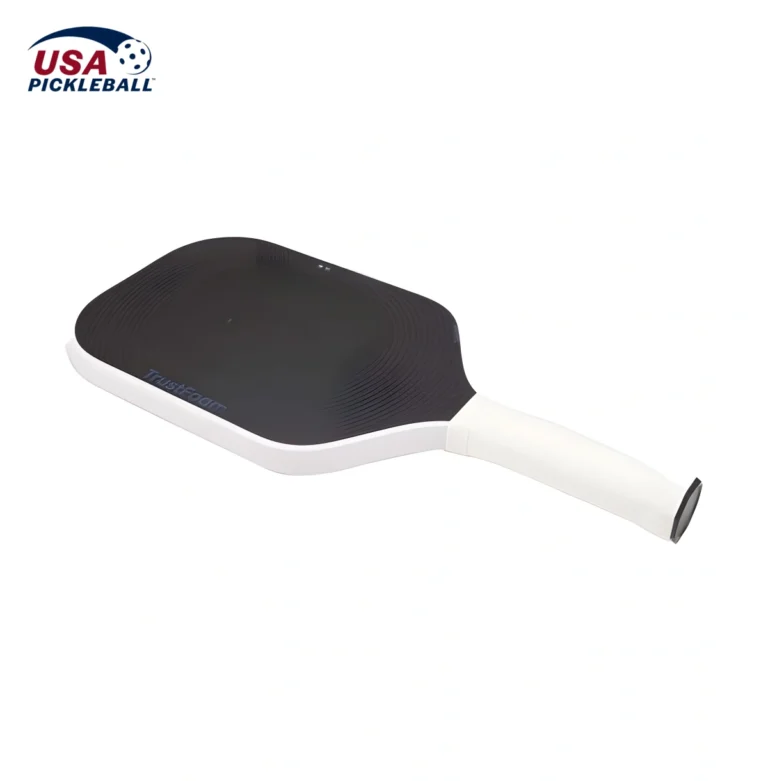
Thermoformed paddle construction uses heat and pressure during molding to bond and form the assembly. Many current designs use a wrapped or molded perimeter architecture, and some incorporate perimeter foam. The exact stack, seam, foam, resin system, and molding cycle vary by design, so “thermoformed” should not be read as one universal recipe.
This route changes the manufacturing problem. Instead of focusing mainly on a separately bonded laminate and later perimeter finishing, the supplier must control a more integrated molding cycle: material placement, mold fit, pressure, heat, resin behavior, perimeter construction, cooling, trimming, and final inspection.
Buyers evaluating current model directions can use a thermoformed paddle collection to identify references, but the product label still needs to be translated into a controlled project specification.
Thermoforming is not a defect-proof label
Marketing copy sometimes treats thermoforming as if it removes all structural failure risk. That is too broad.
Technical paddle discussions distinguish several different problems:
- Delamination: separation within layers of a composite laminate.
- Disbonding: separation at an interface, such as the face-to-core bond.
- Core crush: local collapse or damage within the core structure.
A paddle can also show other manufacturing symptoms such as local voids, shape variation, or inconsistent weight. These should be investigated as specific defects, not all labeled “delamination.”
The practical sourcing lesson is simple: a more integrated construction still needs process control and sample validation. The word “thermoformed” is not a substitute for inspection.
Cold pressed vs thermoformed: compare the manufacturing decision
| Decision area | Cold-pressed construction | Thermoformed construction |
|---|---|---|
| Basic assembly | Commonly uses separately prepared faces bonded to a core under pressure | Uses heat and pressure during molding to form and bond the assembly |
| Perimeter | Often finished with a separate edge guard after trimming | Can use a more integrated wrapped/molded perimeter; foam may be part of the design |
| Development flexibility | Can support component-level changes without assuming one integrated shell | Changes may interact more strongly with mold, perimeter, layup, resin, and molding process |
| Process-control focus | Surface preparation, adhesive application, pressure, cure, trimming, edge fit | Material placement, mold condition, heat/pressure cycle, perimeter, cooling, trimming |
| QC focus | Bond quality, flatness, dimensions, weight, edge-guard fit, surface and cosmetic consistency | Molded geometry, bond/perimeter condition, core condition, dimensions, weight, surface and cosmetic consistency |
| What the buyer should request | Construction definition, material specification, bonding controls, sample tolerances, inspection plan | Construction definition, material/perimeter specification, molding controls, sample tolerances, inspection plan |
| What the label does not prove | Low cost, short lead time, low quality, or high quality | Premium quality, higher performance, defect immunity, or approval |
This is deliberately a qualitative comparison. Exact cycle times, processing conditions, tooling costs, minimum quantities, and performance outcomes belong to the specific supplier and product design.
Sample approval should test repeatability, not just one “good paddle”
The highest-value change a buyer can make is to stop treating a sample as a showroom piece.
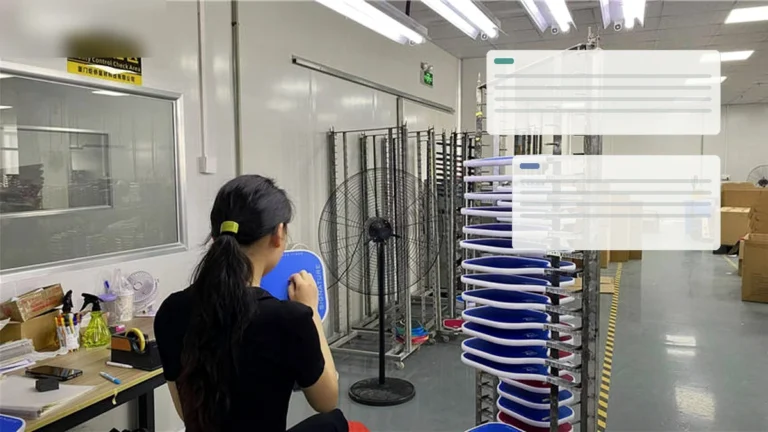
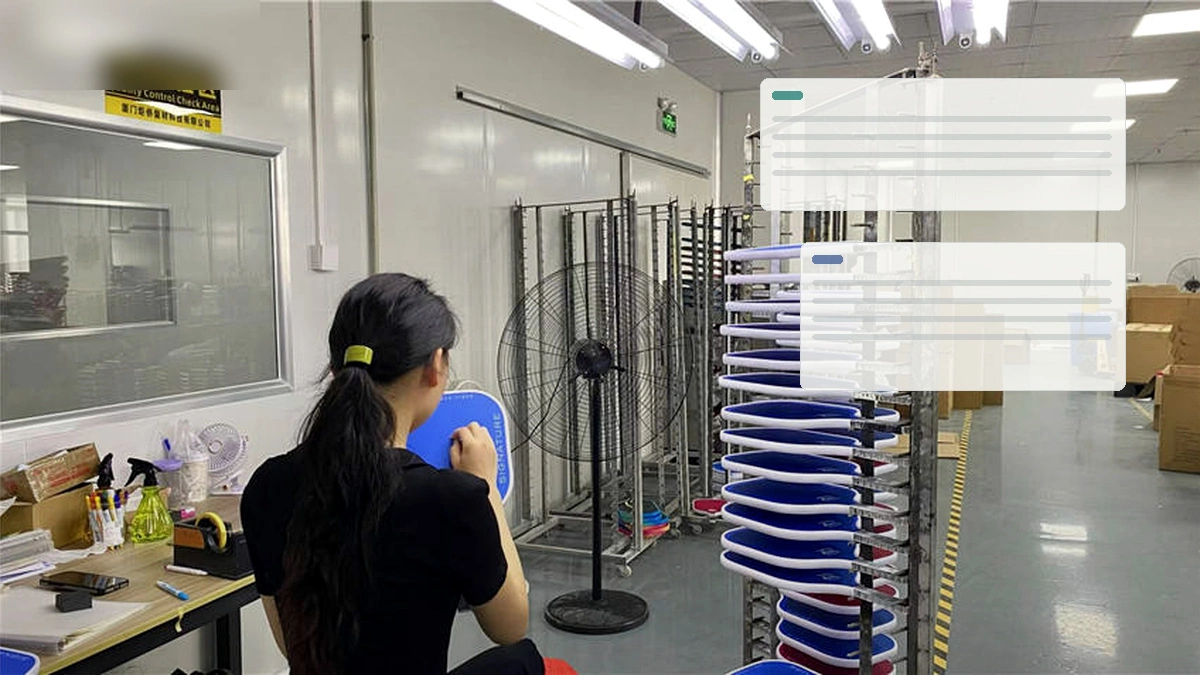
A production-like sample should be a test of the specification and the process behind it. For projects that matter commercially, compare multiple units rather than approving one visually attractive paddle.
VortexPaddle’s quality-control framework separates project definition from inspection evidence. That same principle can be used in a supplier review.
1. Freeze the construction identity
Record what is actually being approved:
- face material and relevant layup definition;
- core material, thickness, and other controlled core details;
- cold-pressed or thermoformed construction route;
- perimeter / edge-guard design;
- handle and grip definition;
- surface finish;
- artwork and model identity;
- packaging or standards-related requirements that affect the product.
If a detail is allowed to vary, define the allowable range. If it is not allowed to vary, mark it as controlled.
2. Measure several production-like samples
At minimum, the review should consider the characteristics that matter to the signed product brief, such as:
- overall weight;
- dimensions;
- thickness at defined measurement points;
- balance or swing weight when the program controls it;
- surface finish;
- perimeter or edge-guard fit;
- handle dimensions;
- graphics and model marking;
- visible bond, core, or finishing defects.
The buyer and supplier should agree on tolerances instead of relying on phrases such as “normal range” or “same as sample.”
3. Inspect failure-sensitive areas
For cold-pressed builds, pay particular attention to the face/core bond and perimeter finishing. For thermoformed builds, inspect the molded perimeter, core condition, overall geometry, and consistency across samples.
Where a project justifies it, the quality plan may also include acoustic comparison, destructive inspection of retained samples, impact/durability checks, or other methods appropriate to the construction. The method matters less than having a defined reason, acceptance rule, and record.
4. Keep a master reference and change record
Once samples are approved, freeze the revision used for production. Keep the signed specification, artwork/model identity, sample evidence, and any retained reference sample connected to the same revision.
This matters because a product can drift without an obvious redesign. A material substitution, surface change, core change, perimeter revision, or process change may affect feel, durability, compliance, or all three.
Certification adds another reason to control production changes
For tournament-oriented products, quality control and external approval are related but not interchangeable.
USA Pickleball’s equipment guidance makes two points especially relevant to B2B buyers:
- A manufacturer can conduct or purchase pre-production testing using the applicable test approach, but pre-testing is not the same as approval.
- After certification, manufacturers are responsible for ensuring that production units continue to match the specifications and construction represented by the certified samples; market compliance can be checked later.
VortexPaddle states the same boundary on its standards-support page: the factory can support controlled samples, specification records, model information, and QC/documentation handoff, while external testing, review, listing, and approval remain outside the factory.
A current October 2026 standards note
USA Pickleball changed its certification process this month. For paddles submitted for certification on or after October 1, 2026, the measured spin rate must be 2,100 RPM or less.
That requirement is time-sensitive. A buyer planning a submission should verify the current standards and submission guidance at the time of the project rather than copy limits from an older sourcing article.
The key procurement implication is not “design to one number and forget it.” It is to keep the submitted model, production definition, and later manufacturing changes under control.
How to choose a construction for a B2B program
Use the construction decision after the product brief, not before it.
Consider cold-pressed construction when:
- you want to evaluate face, core, thickness, outline, graphics, or edge-guard combinations as separable design decisions;
- the intended product architecture does not require an integrated molded perimeter;
- the supplier can demonstrate controlled bonding, trimming, edge finishing, and batch inspection;
- production-like samples meet the agreed specification and tolerances.
Consider thermoformed construction when:
- the intended product architecture specifically calls for a molded/wrapped perimeter or other thermoformed features;
- the supplier can explain and control the actual molding architecture rather than only use the label;
- the mold, layup, perimeter, core, and finishing process can be frozen after sample approval;
- production-like samples show acceptable repeatability before bulk release.
Neither list is a quality ranking. The point is to match the construction to the product definition and the supplier’s demonstrated process capability.
For an OEM program with an already defined specification, the next commercial step belongs on the OEM pickleball paddle page. If you are still comparing available model directions, start with the broader product catalog and build the project brief from there.
RFQ checklist: ask for evidence, not labels
Before requesting a final quotation, give the supplier enough information to evaluate the real project:
- target product or reference model;
- cold-pressed, thermoformed, or undecided construction direction;
- known face, core, thickness, shape, handle, and perimeter requirements;
- target market and sales channel;
- estimated order quantity;
- packaging requirements;
- standards or certification pathway, if relevant;
- artwork/model naming requirements;
- target timing;
- files, drawings, reference images, or current specification;
- sample-review and batch-acceptance expectations.
Then ask the supplier to identify what remains open, what needs validation during sampling, and which production variables must be frozen before bulk manufacturing.
That produces a more useful conversation than asking, “What is your best thermoformed paddle?”
FAQ
Is a cold-pressed pickleball paddle automatically lower quality?
No. Cold pressed describes a manufacturing route, not a quality grade. Quality depends on the chosen materials, bonding and finishing controls, tolerances, inspection, and whether the supplier can reproduce the approved construction.
Does thermoformed automatically mean unibody with perimeter foam?
Not always. Many thermoformed designs use integrated perimeter structures and may use perimeter foam, but exact architectures vary. Ask for the actual cross-section or construction definition rather than inferring it from the marketing label.
Does thermoforming eliminate delamination?
It is safer not to make that universal claim. Delamination, face/core disbonding, and core crush are different failure modes, and a thermoformed paddle can still have manufacturing defects. Validate the actual samples and process.
How many samples should a buyer approve?
There is no universal number that fits every program. The important principle is to review enough production-like units to evaluate repeatability against the frozen specification, rather than approving one hand-picked sample and assuming the full lot will match.
Can a factory guarantee USA Pickleball approval?
No. A factory can support design preparation, prototype or pre-production testing, controlled samples, and documentation. Final testing, listing, and approval are controlled by the external governing body.
What changed on October 1, 2026?
For new USA Pickleball certification submissions on or after October 1, 2026, the paddle must measure 2,100 RPM or less under the new Spin Rate Test. Because equipment rules can change, verify the latest official guidance when preparing a submission.
The sourcing decision in one sentence
Choose cold pressed or thermoformed after you define the product, then approve the supplier’s ability to reproduce that definition through controlled samples, measurable tolerances, documented QC, and disciplined change control.
If those controls are missing, a more advanced-sounding construction label will not fix the sourcing problem.
References